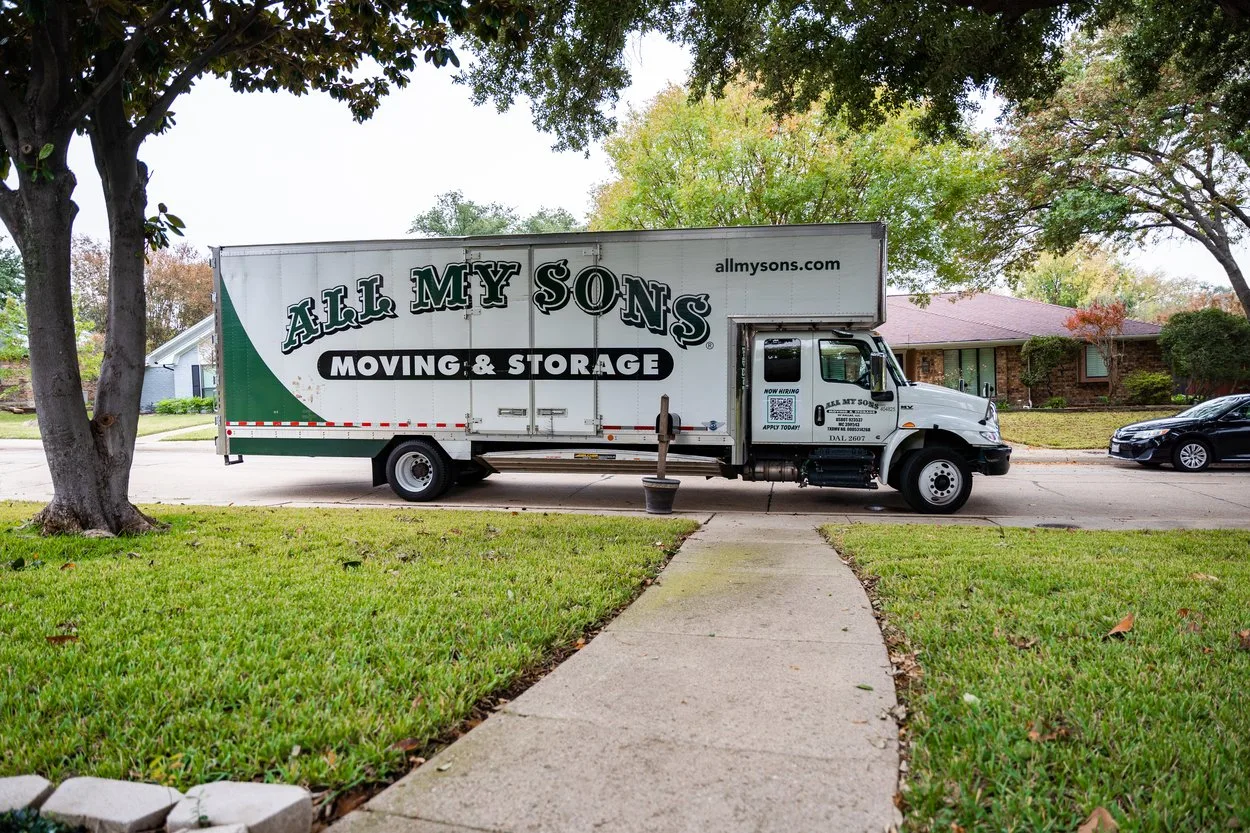
Your Rights and Responsibilities
YOUR RIGHTS AND RESPONSIBILITIES WHEN YOU MOVE
When you move your moving company must furnish you this document as required by
49 CFR 375.213.
OMB No. 2126-0025.
Furnished by Your Mover, as Required by Federal Law.
Authority: 49 U.S.C. 13301, 13704, 13707, and 14104; 49 CFR 1.73.
WHAT IS INCLUDED IN THIS PAMPHLET?
In this pamphlet, you will find a discussion of each of these topics:
-
Why Was I Given This Pamphlet?
-
What Are the Most Important Points I Should Remember From This Pamphlet?
-
What If I Have More Questions?
SUBPART A - GENERAL REQUIREMENTS
-
Who must follow the regulations?
-
What definitions are used in this pamphlet?
SUBPART B - BEFORE REQUESTING SERVICES FROM ANY MOVER
-
What is my mover's normal liability for loss or damage when my mover accepts
goods from me?
-
What actions by me limit or reduce my mover's normal liability?
-
What are dangerous or hazardous materials that may limit or reduce my mover's
normal liability?
-
May my mover have agents?
-
What items must be in my mover's advertisements?
-
How must my mover handle complaints and inquiries?
-
Do I have the right to inspect my mover's tariffs (schedules of charges)
applicable to my move?
-
Must my mover have an arbitration program?
-
Must my mover inform me about my rights and responsibilities under Federal law?
-
What other information must my mover provide to me?
-
How must my mover collect charges?
-
May my mover collect charges upon delivery?
-
May my mover extend credit to me?
-
May my mover accept charge or credit cards for my payments?
SUBPART C - SERVICE OPTIONS PROVIDED
-
What service options may my mover provide?
-
If my mover sells liability insurance coverage, what must my mover do?
SUBPART D - ESTIMATING CHARGES
-
Must my mover estimate the transportation and accessorial charges for my move?
-
How must my mover estimate charges under the regulations?
-
What payment arrangements must my mover have in place to secure delivery of my
household goods shipment?
SUBPART E - PICKUP OF MY SHIPMENT OF HOUSEHOLD GOODS
-
Must my mover write up an order for service?
-
Must my mover write up an inventory of the shipment?
-
Must my mover write up a bill of lading?
-
Should I reach an agreement with my mover about pickup and delivery times?
-
Must my mover determine the weight of my shipment?
-
How must my mover determine the weight of my shipment?
-
What must my mover do if I want to know the actual weight or charges for my
shipment before delivery?
SUBPART F - TRANSPORTATION OF MY SHIPMENT
-
Must my mover transport the shipment in a timely manner?
-
What must my mover do if it is able to deliver my shipment more than 24 hours
before I am able to accept delivery?
-
What must my mover do for me when I store household goods in transit?
SUBPART G - DELIVERY OF MY SHIPMENT
-
May my mover ask me to sign a delivery receipt releasing it from liability?
-
What is the maximum collect-on-delivery amount my mover may demand I pay at the
time of delivery?
-
If my shipment is transported on more than one vehicle, what charges may my
mover collect at delivery?
-
If my shipment is partially or totally lost or destroyed, what charges may my
mover collect at delivery?
-
How must my mover calculate the charges applicable to the shipment as
delivered?
SUBPART H - COLLECTION OF CHARGES
-
Does this subpart apply to most shipments?
-
How must my mover present its freight or expense bill to me?
-
If I forced my mover to relinquish a collect-on-delivery shipment before the
payment of ALL charges, how must my mover collect the balance?
-
What actions may my mover take to collect from me the charges in its freight
bill?
-
Do I have a right to file a claim to recover money for property my mover lost
or damaged?
SUBPART I - RESOLVING DISPUTES WITH MY MOVER
-
What may I do to resolve disputes with my mover?
-
WHY WAS I GIVEN THIS PAMPHLET?
The Federal Motor Carrier Safety Administration's (FMCSA) regulations protect
consumers on interstate moves and define the rights and responsibilities of
consumers and household goods carriers.
The household goods carrier (mover) gave you this booklet to provide information
about your rights and responsibilities as an individual shipper of household
goods. Your primary responsibility is to select a reputable household goods
carrier, ensure that you understand the terms and conditions of the contract,
and understand and pursue the remedies that are available to you in case
problems arise. You should talk to your mover if you have further questions.
The mover will also furnish you with additional written information describing
its procedure for handling your questions and complaints. The additional
written information will include a telephone number you can call to obtain
additional information about your move.
WHAT ARE THE MOST IMPORTANT POINTS I SHOULD REMEMBER FROM THIS PAMPHLET?
-
Movers must give written estimates.
-
Movers may give binding estimates.
-
Non-binding estimates are not always accurate; actual charges may exceed the
estimate.
-
If your mover provides you (or someone representing you) with any partially
complete document for your signature, you should verify the document is as
complete as possible before signing it. Make sure the document contains all
relevant shipping information, except the actual shipment weight and any other
information necessary to determine the final charges for all services
performed.
-
You may request from your mover the availability of guaranteed pickup and
delivery dates.
-
Be sure you understand the mover's responsibility for loss or damage, and
request an explanation of the difference between valuation and actual
insurance.
-
You have the right to be present each time your shipment is weighed.
-
You may request a reweigh of your shipment.
-
If you agree to move under a non-binding estimate, you should confirm with your
mover - in writing - the method of payment at delivery as cash, certified
check, cashier's check, money order, or credit card.
-
Movers must offer a dispute settlement program as an alternative means of
settling loss or damage claims. ASK YOUR MOVER FOR DETAILS.
-
You should ask the person you speak to whether he or she works for the actual
mover or a household goods broker. A household goods broker only arranges for
the transportation. A household goods broker must not represent itself as a
mover. A household goods broker does not own trucks of its own. The broker is
required to find an authorized mover to provide the transportation. You should
know that a household goods broker generally has no authority to provide you an
estimate on behalf of a specific mover. If a household goods broker provides
you an estimate, it may not be binding on the actual mover and you may have to
pay the actual charges the mover incurs. A household goods broker is not
responsible for loss or damage.
-
You may request complaint information about movers from the Federal Motor
Carrier Safety Administration under the Freedom of Information Act. You may be
assessed a fee to obtain this information. See 49 CFR Part 7 for the schedule
of fees.
-
You should seek estimates from at least three different movers. You should not
disclose any information to the different movers about their competitors, as it
may affect the accuracy of their estimates.
-
WHAT IF I HAVE MORE QUESTIONS?
If this pamphlet does not answer all of your questions about your move, do not
hesitate to ask your mover's representative who handled the arrangements for
your move, the driver who transports your shipment, or the mover's main office
for additional information.
SUBPART A - GENERAL REQUIREMENTS
The primary responsibility for your protection lies with you in selecting a
reputable household goods carrier, ensuring you understand the terms and
conditions of your contract with your mover, and understanding and pursuing the
remedies that are available to you in case problems arise.
-
Who must follow the regulations?
The regulations inform motor carriers engaged in the interstate transportation
of household goods (movers) what standards they must follow when offering
services to you. You, an individual shipper, are not directly subject to the
regulations. However, your mover may be required by the regulations to force
you to pay on time. The regulations only apply to your mover when the mover
transports your household goods by motor vehicle in interstate commerce - that
is, when you are moving from one State to another. The regulations do not apply
when your interstate move takes place within a single commercial zone. A
commercial zone is roughly equivalent to the local metropolitan area of a city
or town. For example, a move between Brooklyn, NY, and Hackensack, NJ, would be
considered to be within the New York City commercial zone and would not be
subject to these regulations. Commercial zones are defined in 49 CFR part 372.
-
What definitions are used in this pamphlet?
ACCESSORIAL (ADDITIONAL) SERVICES - These are services such as packing,
appliance servicing, unpacking, or piano stair carries that you request to be
performed (or that are necessary because of landlord requirements or other
special circumstances). Charges for these services may be in addition to the
line haul charges.
ADVANCED CHARGES - These are charges for services performed by someone other
than the mover. A professional, craftsman, or other third party may perform
these services at your request. The mover pays for these services and adds the
charges to your bill of lading charges.
ADVERTISEMENT - This is any communication to the public in connection with an
offer or sale of any interstate household goods transportation service. This
will include written or electronic database listings of your mover's name,
address, and telephone number in an on-line database. This excludes listings of
your mover's name, address, and telephone number in a telephone directory or
similar publication. However, Yellow Pages advertising is included within the
definition.
AGENT - A local moving company authorized to act on behalf of a larger, national
company.
APPLIANCE SERVICE BY THIRD PARTY - The preparation of major electrical
appliances to make them safe for shipment. Charges for these services may be in
addition to the line haul charges.
BILL OF LADING - The receipt for your goods and the contract for their
transportation.
CARRIER - The mover transporting your household goods.
CASH ON DELIVERY (COD) - This means payment is required at the time of delivery
at the destination residence (or warehouse).
CERTIFIED SCALE - Any scale designed for weighing motor vehicles, including
trailers or semitrailers not attached to a tractor, and certified by an
authorized scale inspection and licensing authority. A certified scale may also
be a platform or warehouse type scale that is properly inspected and certified.
ESTIMATE, BINDING - This is an agreement made in advance with your mover. It
guarantees the total cost of the move based upon the quantities and services
shown on the estimate.
ESTIMATE, NON-BINDING - This is what your mover believes the cost will be, based
upon the estimated weight of the shipment and the accessorial services
requested. A non-binding estimate is not binding on the mover. The final
charges will be based upon the actual weight of your shipment, the services
provided, and the tariff provisions in effect.
EXPEDITED SERVICE - This is an agreement with the mover to perform
transportation by a set date in exchange for charges based upon a higher
minimum weight.
FLIGHT CHARGE - A charge for carrying items up or down flights of stairs.
Charges for these services may be in addition to the line haul charges.
GUARANTEED PICKUP AND DELIVERY SERVICE - An additional level of service
featuring guaranteed dates of service. Your mover will provide reimbursement to
you for delays. This premium service is often subject to minimum weight
requirements.
HIGH VALUE ARTICLE - These are items included in a shipment valued at more than
$100 per pound ($220 per kilogram).
HOUSEHOLD GOODS, as used in connection with transportation, means the personal
effects or property used, or to be used, in a dwelling, when part of the
equipment or supplies of the dwelling. Transportation of the household goods
must be arranged and paid for by you or by another individual on your behalf.
This may include items moving from a factory or store when you purchase them to
use in your dwelling. You must request that these items be transported, and you
(or another individual on your behalf) must pay the transportation charges to
the mover.
INVENTORY - The detailed descriptive list of your household goods showing the
number and condition of each item.
LINE HAUL CHARGES - The charges for the vehicle transportation portion of your
move. These charges, if separately stated, apply in addition to the
accessorial service charges.
LONG CARRY - A charge for carrying articles excessive distances between the
mover's vehicle and your residence. Charges for these services may be in
addition to the line haul charges.
MAY - An option. You or your mover may do something, but it is not a
requirement.
MOVER - A motor carrier engaged in the transportation of household goods and its
household goods agents.
MUST - A legal obligation. You or your mover must do something.
ORDER FOR SERVICE - The document authorizing the mover to transport your
household goods.
ORDER (BILL OF LADING) NUMBER - The number used to identify and track your
shipment.
PEAK SEASON RATES - Higher line haul charges applicable during the summer
months.
PICKUP AND DELIVERY CHARGES - Separate transportation charges applicable for
transporting your shipment between the storage-in-transit warehouse and your
residence.
REASONABLE DISPATCH - The performance of transportation on the dates, or during
the period of time, agreed upon by you and your mover and shown on the Order
for Service/Bill of Lading. For example, if your mover deliberately withholds
any shipment from delivery after you offer to pay the binding estimate or 110
percent of a non-binding estimate, your mover has not transported the goods
with reasonable dispatch. The term "reasonable dispatch" excludes
transportation provided under your mover's tariff provisions requiring
guaranteed service dates. Your mover will have the defense of force majeure,
i.e., that the contract cannot be performed owing to causes that are outside
the control of the parties and that could not be avoided by exercise of due
care.
SHOULD - A recommendation. We recommend you or your mover do something, but it
is not a requirement.
SHUTTLE SERVICE - The use of a smaller vehicle to provide service to residences
not accessible to the mover's normal line haul vehicles.
STORAGE-IN-TRANSIT (SIT) - The temporary warehouse storage of your shipment
pending further transportation, with or without notification to you. If you (or
someone representing you) cannot accept delivery on the agreed-upon date or
within the agreed-upon time period (for example, because your home is not quite
ready to occupy), your mover may place your shipment into SIT without notifying
you. In those circumstances, you will be responsible for the added charges for
SIT service, as well as the warehouse handling and final delivery charges.
However, your mover also may place your shipment into SIT if your mover was able
to make delivery before the agreed-upon date (or before the first day of the
agreed-upon delivery period), but you did not concur with early delivery. In
those circumstances, your mover must notify you immediately of the SIT, and
your mover is fully responsible for redelivery charges, handling charges, and
storage charges.
SURFACE TRANSPORTATION BOARD - An agency within the U.S. Department of
Transportation that regulates household goods carrier tariffs, among other
responsibilities. The Surface Transportation Board's address is 1925 K Street
NW., Washington, DC 20423-0001 Tele. 202-565-1674.
TARIFF - An issuance (in whole or in part) containing rates, rules, regulations,
classifications, or other provisions. The Surface Transportation Board requires
that a tariff contain three specific items. First, an accurate description of
the services the mover offers to the public. Second, the specific applicable
rates (or the basis for calculating the specific applicable rates) and service
terms for services offered to the public. Third, the mover's tariff must be
arranged in a way that allows you to determine the exact rate(s) and service
terms applicable to your shipment.
VALUATION - The degree of worth of the shipment. The valuation charge
compensates the mover for assuming a greater degree of liability than is
provided for in its base transportation charges.
WAREHOUSE HANDLING - A charge may be applicable each time SIT service is
provided. Charges for these services may be in addition to the line haul
charges. This charge compensates the mover for the physical placement and
removal of items within the warehouse.
WE, US, and OUR - The Federal Motor Carrier Safety Administration (FMCSA).
YOU and YOUR - You are an individual shipper of household goods. You are a
consignor or consignee of a household goods shipment and your mover identifies
you as such in the bill of lading contract. You own the goods being transported
and pay the transportation charges to the mover.
-
Where may other terms used in this pamphlet be defined?
You may find other terms used in this pamphlet defined in 49 U.S.C. 13102. The
statute controls the definitions in this pamphlet. If terms are used in this
pamphlet and the terms are defined neither here nor in 49 U.S.C. 13102, the
terms will have the ordinary practical meaning of such terms.
SUBPART B - BEFORE REQUESTING SERVICES FROM ANY MOVER
-
What is my mover's normal liability for loss or damage when my mover accepts
goods from me?
In general, your mover is legally liable for loss or damage that occurs during
performance of any transportation of household goods and of all related
services identified on your mover's lawful bill of lading.
Your mover is liable for loss of, or damage to, any household goods to the
extent provided in the current Surface Transportation Board's Released Rates
Order. You may obtain a copy of the current Released Rates Order by contacting
the Surface Transportation Board at the address provided under the definition
of the Surface Transportation Board. The rate may be increased annually by your
mover based on the U.S. Department of Commerce's Cost of Living Adjustment.
Your mover may have additional liability if your mover sells liability
insurance to you.
All moving companies are required to assume liability for the value of the goods
transported. However, there are different levels of liability, and you should
be aware of the amount of protection provided and the charges for each option.
Basically, most movers offer two different levels of liability (options 1 and
two below) under the terms of their tariffs and the Surface Transportation
Board's Released Rates Orders. These orders govern the moving industry.
OPTION 1: RELEASED VALUE
This is the most economical protection option available. This no-additional-cost
option provides minimal protection. Under this option, the mover assumes
liability for no more than 60 cents per pound ($1.32 cents per kilogram), per
article. Loss or damage claims are settled based upon the pound (kilogram)
weight of the article multiplied by 60 cents per pound ($1.32 cents per
kilogram). For example, if your mover lost or destroyed a 10-pound
(4.54-kilogram) stereo component valued at $1,000, your mover would be liable
for no more than $6.00. Obviously, you should think carefully before agreeing
to such an arrangement. There is no extra charge for this minimal protection,
but you must sign a specific statement on the bill of lading agreeing to it.
OPTION 2: FULL VALUE PROTECTION (FVP)
Under this option, the mover is liable for the replacement value of lost or
damaged goods (as long as it doesn't exceed the total declared value of the
shipment). If you elect to purchase full value protection, and your mover
loses, damages or destroys your articles, your mover must repair, replace with
like items, or settle in cash at the current market replacement value,
regardless of the age of the lost or damaged item. The minimum declared value
of a shipment under this option is $5,000 or $4.00 times the actual total
weight (in pounds) of the shipment, whichever is greater. For example, the
minimum declared value for a 4,000-pound (1,814.4-kilogram) shipment would be
$16,000. Your mover may offer you FVP with a $250 or $500 deductible, or with
no deductible at all. The amount of the deductible will affect the cost of your
FVP coverage. The $4.00 per pound minimum valuation rate may be increased
annually by your mover based on changes in the household furnishings element of
the Consumer Price Index established by the U.S. Department of Labor's Bureau
of Labor Statistics.
Unless you specifically agree to other arrangements, the mover must assume
liability for the entire shipment based upon this option. The approximate cost
for FVP is $8.50 for each $1,000 of declared value; however, it may vary by
mover. In the example above, the valuation charge for a shipment valued at
$16,000 would be $136.00. As noted above, this fee may be adjusted annually by
your mover based on changes in the household furnishings element of the
Consumer Price Index.
Under both of these liability options, movers are permitted to limit their
liability for loss or damage to articles of extraordinary value, unless you
specifically list these articles on the shipping documents. An article of
extraordinary value is any item whose value exceeds $100 per pound ($220 per
kilogram). Ask your mover for a complete explanation of this limitation before
your move. It is your responsibility to study this provision carefully and make
the necessary declaration.
These optional levels of liability are not insurance agreements governed by
State insurance laws, but instead are authorized under Released Rates Orders of
the Surface Transportation
Board of the U.S. Department of Transportation.
In addition to these options, some movers may also offer to sell, or procure
for you, separate liability insurance from a third-party insurance company when
you release your shipment for transportation at the minimum released value of
60 cents per pound ($1.32 per kilogram) per article (option 1). This is not
valuation coverage governed by Federal law, but optional insurance regulated
under State law. If you purchase this separate coverage and your mover is
responsible for loss or damage, the mover is liable only for an amount not
exceeding 60 cents per pound ($1.32 per kilogram) per article, and the balance
of the loss is recoverable from the insurance company up to the amount of
insurance purchased. The mover's representative can advise you of the
availability of such liability insurance, and the cost.
If you purchase liability insurance from or through your mover, the mover is
required to issue a policy or other written record of the purchase and to
provide you with a copy of the policy or other document at the time of
purchase. If the mover fails to comply with this requirement, the mover becomes
fully liable for any claim for loss or damage attributed to its negligence.
-
What actions by me limit or reduce my mover's normal liability?
Your actions may limit or reduce your mover's normal liability under the
following three circumstances:
-
You include perishable, dangerous, or hazardous materials in your household
goods without your mover's knowledge.
-
You choose liability option 1 but ship household goods valued at more than 60
cents per pound ($1.32 per kilogram) per article.
-
You fail to notify your mover in writing of articles valued at more than $100
per pound ($220 per kilogram). (If you do notify your mover, you will be
entitled to full recovery up to the declared value of the article or articles,
not to exceed the declared value of the entire shipment.)
-
What are dangerous or hazardous materials that may limit or reduce my mover's
normal liability?
Federal law forbids you to ship hazardous materials in your household goods
boxes or luggage without informing your mover. A violation can result in five
years' imprisonment and penalties of $250,000 or more (49 U.S.C. 5124). You
could also lose or damage your household goods by fire, explosion, or
contamination.
If you offer hazardous materials to your mover, you are considered a hazardous
materials shipper and must comply with the hazardous materials requirements in
49 CFR parts 171, 172, and 173, including but not limited to package labeling
and marking, shipping papers, and emergency response information. Your mover
must comply with 49 CFR parts 171, 172, 173, and 177 as a hazardous materials
carrier.
Hazardous materials include explosives, compressed gases, flammable liquids and
solids, oxidizers, poisons, corrosives, and radioactive materials. Examples:
Nail polish remover, paints, paint thinners, lighter fluid, gasoline,
fireworks, oxygen bottles, propane cylinders, automotive repair and maintenance
chemicals, and radio-pharmaceuticals.
There are special exceptions for small quantities (up to 70 ounces total) of
medicinal and toilet articles carried in your household goods and certain
smoking materials carried on your person. For further information, contact your
mover.
-
May my mover have agents?
Yes, your mover may have agents. If your mover has agents, your mover must have
written agreements with its prime agents. Your mover and its retained prime
agent must sign their agreements. Copies of your mover's prime agent agreements
must be in your mover's files for a period of at least 24 months following the
date of termination of each agreement.
-
What items must be in my mover's advertisements?
Your mover must publish and use only truthful, straightforward, and honest
advertisements. Your mover must include certain information in all
advertisements for all services (including any accessorial services incidental
to or part of interstate transportation). Your mover must require each of its
agents to include the same information in its advertisements. The information
must include the following two pieces of information about your mover:
-
Name or trade name of the mover under whose USDOT number the advertised service
will originate.
-
USDOT number, assigned by FMCSA, authorizing your mover to operate. Your mover
must display the information as: USDOT No. (assigned number).
You should compare the name or trade name of the mover and its USDOT number to
the name and USDOT number on the sides of the truck(s) that arrive at your
residence. The names and numbers should be identical. If the names and numbers
are not identical, you should ask your mover immediately why they are not. You
should not allow the mover to load your household goods on its truck(s) until
you obtain a satisfactory response from the mover's local agent. The
discrepancies may warn of problems you will have later in your business
dealings with this mover.
-
How must my mover handle complaints and inquiries?
All movers are expected to respond promptly to complaints or inquiries from you,
the customer. Should you have a complaint or question about your move, you
should first attempt to obtain a satisfactory response from the mover's local
agent, the sales representative who handled the arrangements for your move, or
the driver assigned to your shipment.
If for any reason you are unable to obtain a satisfactory response from one of
these persons, you should then contact the mover's principal office. When you
make such a call, be sure to have available your copies of all documents
relating to your move. Particularly important is the number assigned to your
shipment by your mover.
Interstate movers are also required to offer neutral arbitration as a means of
resolving consumer loss or damage disputes involving loss of or damage to
household goods. Your mover is required to provide you with information
regarding its arbitration program. You have the right to pursue court action
under 49 U.S.C. 14706 to seek judicial redress directly rather than participate
in your mover's arbitration program.
All interstate moving companies are required to maintain a complaint and inquiry
procedure to assist their customers. At the time you make the arrangements for
your move, you should ask the mover's representative for a description of the
mover's procedure, the telephone number to be used to contact the mover, and
whether the mover will pay for such telephone calls. Your mover's procedure
must include the following four things:
-
A communications system allowing you to communicate with your mover's principal
place of business by telephone.
-
A telephone number.
-
A clear and concise statement about who must pay for complaint and inquiry
telephone calls.
-
A written or electronic record system for recording all inquiries and
complaints received from you by any means of communication.
Your mover must give you a clear and concise written description of its
procedure. You may want to be certain that the system is in place.
-
Do I have the right to inspect my mover's tariffs (schedules of charges)
applicable to my move?
Federal law requires your mover to advise you of your right to inspect your
mover's tariffs (its schedules of rates or charges) governing your shipment.
Movers' tariffs are made a part of the contract of carriage (bill of lading)
between you and the mover. You may inspect the tariff at the mover's facility,
or, upon request, the mover will furnish you a free copy of any tariff
provision containing the mover's rates, rules, or charges governing your
shipment.
Tariffs may include provisions limiting the mover's liability. This would
generally be described in a section on declaring value on the bill of lading. A
second tariff provision may set the periods for filing claims. This would
generally be described in Section 6 on the reverse side of a bill of lading. A
third tariff provision may reserve your mover's right to assess additional
charges for additional services performed. For non-binding estimates, another
tariff provision may base charges upon the exact weight of the goods
transported. Your mover's tariff may contain other provisions that apply to
your move. Ask your mover what they might be, and request a copy.
-
Must my mover have an arbitration program?
Your mover must have an arbitration program for your use in resolving disputes
concerning loss or damage to your household goods. You have the right not to
participate in the arbitration program. You may pursue court action under 49
U.S.C. 14706 to seek judicial remedies directly. Your mover must establish and
maintain an arbitration program with the following 11 minimum elements:
-
The arbitration program offered to you must prevent your mover from having any
special advantage because you live or work in a place distant from the mover's
principal or other place of business.
-
Before your household goods are tendered for transport, your mover must provide
notice to you of the availability of neutral arbitration, including the
following three things:
a. A summary of the arbitration procedure.
b. Any applicable costs.
c. A disclosure of the legal effects of electing to use arbitration.
-
Upon your request, your mover must provide information and forms it considers
necessary for initiating an action to resolve a dispute under arbitration.
-
Each person authorized to arbitrate must be independent of the parties to the
dispute and capable of resolving such disputes fairly and expeditiously. Your
mover must ensure the arbitrator is authorized and able to obtain from you or
your mover any material or relevant information to carry out a fair and
expeditious decision-making process.
-
You must not be required to pay more than one-half of the arbitration's cost.
The arbitrator may determine the percentage of payment of the costs for each
party in the arbitration decision, but must not make you pay more than half.
-
Your mover must not require you to agree to use arbitration before a dispute
arises.
-
You will be bound by arbitration for claims of $5,000 or less if you request
arbitration.
-
You will be bound by arbitration for claims of more than $5,000 only if you
request arbitration and your mover agrees to it.
-
If you and your mover both agree, the arbitrator may provide for an oral
presentation of a dispute by a party or representative of a party.
-
The arbitrator must render a decision within 60 days of receipt of written
notification of the dispute, and a decision by an arbitrator may include any
remedies appropriate under the circumstances.
-
The 60-day period may be extended for a reasonable period if you fail, or your
mover fails, to provide information in a timely manner.
Your mover must produce and distribute a concise, easy-to-read, accurate summary
of its arbitration program.
-
Must my mover inform me about my rights and responsibilities under Federal law?
Yes, your mover must inform you about your rights and responsibilities under
Federal law. Your mover must produce and distribute this document. It should be
in the general order and contain the text of appendix A to 49 CFR Part 375.
-
What other information must my mover provide me?
Before your mover executes an order for service for a shipment of household
goods, your mover must furnish you with the following four documents:
-
The contents of appendix A, "Your Rights and Responsibilities When You
Move" - this pamphlet.
-
A concise, easy-to-read, accurate summary of your mover's arbitration program.
-
A notice of availability of the applicable sections of your mover's tariff for
the estimate of charges, including an explanation that you may examine the
tariff sections or have copies sent to you upon request.
-
A concise, easy-to-read, accurate summary of your mover's customer complaint
and inquiry handling procedures. Included in this summary must be the following
two items:
a. The main telephone number you may use to communicate with your mover.
b. A clear and concise statement concerning who must pay for telephone calls.
Your mover may, at its discretion, provide additional information to you.
-
How must my mover collect charges?
Your mover must issue you an honest, truthful freight or expense bill for each
shipment transported. Your mover's freight or expense bill must contain the
following 19 items:
-
Name of the consignor.
-
Name of the consignees.
-
Date of the shipment.
-
Origin point.
-
Destination points.
-
Number of packages.
-
Description of the freight.
-
Weight of the freight (if applicable to the rating of the freight).
-
The volume of the freight (if applicable to the rating of the freight).
-
The measurement of the freight (if applicable to the rating of the freight).
-
Exact rate(s) assessed.
-
Disclosure of the actual rates, charges, and allowances for the transportation
service, when your mover electronically presents or transmits freight or
expense bills to you. These rates must be in accordance with the mover's
applicable tariff.
-
An indication of whether adjustments may apply to the bill.
-
Total charges due and acceptable methods of payment.
-
The nature and amount of any special service charges.
-
The points where special services were rendered.
-
Route of movement and name of each mover participating in the transportation.
-
Transfer points where shipments moved.
-
Address where you must pay or address of bill issuer's principal place of
business.
Your mover must present its freight or expense bill to you within 15 days of the
date of delivery of a shipment at its destination. The computation of time
excludes Saturdays, Sundays, and Federal holidays. (Bills for charges exceeding
110 percent of a non-binding estimate, and for additional services requested or
found necessary after the shipment is in transit, will be presented no sooner
than 30 days after the date of delivery.)
If your mover lacks sufficient information to compute its charges, your mover
must present its freight bill for payment within 15 days of the date when
sufficient information does become available.
-
May my mover collect charges upon delivery?
Yes. Your mover must specify the form of payment acceptable at delivery when the
mover prepares an estimate and order for service. The mover and its agents must
honor the form of payment at delivery, except when you mutually agree to a
change in writing. The mover must also specify the same form of payment when it
prepares your bill of lading, unless you agree to a change. See also "May
my mover accept charge or credit cards for my payments?"
You must be prepared to pay 10 percent more than the estimated amount, if your
goods are moving under a non-binding estimate. Every collect-on-delivery
shipper must have available 110 percent of the estimate at the time of
delivery.
-
May my mover extend credit to me?
Extending credit to you is not the same as accepting your charge or credit
card(s) as payment. Your mover may extend credit to you in the amount of the
tariff charges. If your mover extends credit to you, your mover becomes like a
bank offering you a line of credit, whose size and interest rate are determined
by your ability to pay its tariff charges within the credit period. Your mover
must ensure you will pay its tariff charges within the credit period. Your
mover may relinquish possession of freight before you pay its tariff charges,
at its discretion.
The credit period must begin on the day following presentation of your mover's
freight bill to you. Under Federal regulation, the standard credit period is 7
days, excluding Saturdays, Sundays, and Federal holidays. Your mover must also
extend the credit period to a total of 30 calendar days if the freight bill is
not paid within the 7-day period. A service charge equal to one percent of the
amount of the freight bill, subject to a $20 minimum, will be assessed for this
extension and for each additional 30-day period the charges go unpaid.
Your failure to pay within the credit period will require your mover to
determine whether you will comply with the Federal household goods
transportation credit regulations in good faith in the future before extending
credit again.
-
May my mover accept charge or credit cards for my payments?
Your mover may allow you to use a charge or credit card for payment of the
freight charges. Your mover may accept charge or credit cards whenever you ship
with it under an agreement and tariff requiring payment by cash or cash
equivalents. Cash equivalents are a certified check, money order, or cashier's
check (a check that a financial institution - bank, credit union, savings and
loan - draws upon itself and that is signed by an officer of the financial
institution).
If your mover allows you to pay for a freight or expense bill by charge or
credit card, your mover deems such a payment to be equivalent to payment by
cash, certified check, or cashier's check. It must note in writing on the order
for service and the bill of lading whether you may pay for the transportation
and related services using a charge or credit card. You should ask your mover
at the time the estimate is written whether it will accept charge or credit
cards at delivery.
The mover must specify what charge or credit cards it will accept, such as
American Express, Discover, MasterCard, or Visa. If your mover agrees to accept
payment by charge or credit card, you must arrange with your mover for the
delivery only at a time when your mover can obtain authorization for your
credit card transaction.
If you cause a charge or credit card issuer to reverse a transaction, your mover
may consider your action tantamount to forcing your mover to provide an
involuntary extension of its credit.
SUBPART C - SERVICE OPTIONS PROVIDED
-
What service options may my mover provide?
Your mover may provide any service options it chooses. It is customary for
movers to offer several price and service options.
The total cost of your move may increase if you want additional or special
services. Before you agree to have your shipment moved under a bill of lading
providing special service, you should have a clear understanding with your
mover of what the additional cost will be. You should always consider whether
other movers may provide the services you require without requiring you to pay
the additional charges.
One service option is a SPACE RESERVATION. If you agree to have your shipment
transported under a space reservation agreement, you will pay for a minimum
number of cubic feet of space in the moving van regardless of how much space in
the van your shipment actually occupies.
A second option is EXPEDITED SERVICE. This aids you if you must have your
shipments transported on or between specific dates when the mover could not
ordinarily agree to do so in its normal operations.
A third customary service option is EXCLUSIVE USE OF A VEHICLE. If for any
reason you desire or require that your shipment be moved by itself on the
mover's truck or trailer, most movers will provide such service.
Another service option is GUARANTEED SERVICE ON OR BETWEEN AGREED DATES. You
enter into an agreement with the mover where the mover provides for your
shipment to be picked up, transported to destination, and delivered on specific
guaranteed dates. If the mover fails to provide the service as agreed, you are
entitled to be compensated at a predetermined amount or a daily rate (per diem)
regardless of the expense you might actually have incurred as a result of the
mover's failure to perform.
Before requesting or agreeing to any of these price and service options, be sure
to ask the mover's representatives about the final costs you will pay.
TRANSPORT OF SHIPMENTS ON TWO OR MORE VEHICLES
Although all movers try to move each shipment on one truck, it becomes
necessary, at times, to divide a shipment among two or more trucks. This may
occur if your mover has underestimated the cubic feet (meters) of space
required for your shipment and it will not all fit on the first truck. Your
mover will pick up the remainder, or "leave behind," on a second
truck at a later time, and this part of your shipment may arrive at the
destination later than the first truck. When this occurs, your transportation
charges will be determined as if the entire shipment had moved on one truck.
If it is important for you to avoid this inconvenience of a "leave
behind," be sure your estimate includes an accurate calculation of the
cubic feet (meters) required for your shipment. Ask your estimator to use a
"Table of Measurements" form in making this calculation. Consider
asking for a binding estimate. A binding estimate is more likely to be
conservative with regard to cubic feet (meters) than a non-binding estimate. If
the mover offers space reservation service, consider purchasing this service
for the necessary amount of space plus some margin for error. In any case, you
would be prudent to "prioritize" your goods in advance of the move so
the driver will load the more essential items on the first truck if some are
left behind.
-
If my mover sells liability insurance coverage, what must my mover do?
If your mover provides the service of selling additional liability insurance,
your mover must follow certain regulations.
Your mover, its employees, or its agents, may sell, offer to sell, or procure
additional liability insurance coverage for you for loss or damage to your
shipment if you release the shipment for transportation at a value not
exceeding 60 cents per pound ($1.32 per kilogram) per article.
Your mover may offer, sell, or procure any type of insurance policy covering
loss or damage in excess of its specified liability.
Your mover must issue you a policy or other appropriate evidence of the
insurance you purchased. Your mover must provide a copy of the policy or other
appropriate evidence to you at the time your mover sells or procures the
insurance. Your mover must issue policies written in plain English.
Your mover must clearly specify the nature and extent of coverage under the
policy. Your mover's failure to issue you a policy, or other appropriate
evidence of insurance you purchased, will subject your mover to full liability
for any claims to recover loss or damage attributed to it.
Your mover's tariff must provide for liability insurance coverage. The tariff
must also provide for the base transportation charge, including its assumption
of full liability for the value of the shipment. This would offer you a degree
of protection in the event your mover fails to issue you a policy or other
appropriate evidence of insurance at the time of purchase.
SUBPART D - ESTIMATING CHARGES
-
Must my mover estimate the transportation and accessorial charges for my move?
We require your mover to prepare a written estimate on every shipment
transported for you. You are entitled to a copy of the written estimate when
your mover prepares it. Your mover must provide you a written estimate of all
charges, including transportation, accessorial, and advance charges. Your
mover's "rate quote" is not an estimate. You and your mover must sign
the estimate of charges. Your mover must provide you with a dated copy of the
estimate of charges at the time you sign the estimate.
You should be aware that if you receive an estimate from a household goods
broker, the mover is not required to accept the estimate. Be sure to obtain a
written estimate from the mover if a mover tells you orally that it will accept
the broker's estimate.
Your mover must specify the form of payment the mover and its delivering agent
will honor at delivery. Payment forms may include but are not limited to cash,
certified check, money order, cashier's check, a specific charge card such as
American Express, a specific credit card such as Visa, and your mover's own
credit.
If your mover provides you with an estimate based on volume that will later be
converted to a weight-based rate, the mover must provide you an explanation in
writing of the formula used to calculate the conversion to weight. Your mover
must specify that the final charges will be based on actual weight and
services. Before loading your household goods, and upon mutual agreement
between you and your mover, your mover may amend an estimate of charges. Your
mover may not amend the estimate after loading the shipment.
A binding estimate is an agreement made in advance with your mover. It
guarantees the total cost of the move based upon the quantities and services
shown on your mover's estimate.
A non-binding estimate is what your mover believes the total cost will be for
the move, based upon the estimated weight of the shipment and the accessorial
services requested. A non-binding estimate is not binding on your mover. Your
mover will base the final charges upon the actual weight of your shipment, the
services provided, and its tariff provisions in effect. You must be prepared to
pay 10 percent more than the estimated amount at delivery.
-
How must my mover estimate charges under the regulations?
BINDING ESTIMATES Your mover may charge you for providing a binding estimate.
The binding estimate must clearly describe the shipment and all services
provided.
When you receive a binding estimate, you cannot be required to pay any more than
the estimated amount at delivery. If you have requested the mover provide more
services than those included in the estimate, the mover must not demand full
payment for those added services at time of delivery. Instead, the mover must
bill for those services later, as explained below. Such services might include
destination charges that often are not known at origin (such as long carry
charges, shuttle charges, or extra stair carry charges).
A binding estimate must be in writing, and a copy must be made available to you
before you move.
If you agree to a binding estimate, you are responsible for paying the charges
due by cash, certified check, money order, or cashier's check. The charges are
due your mover at the time of delivery unless your mover agrees, before you
move, to extend credit or to accept payment by a specific charge card such as
American Express or a specific credit card such as Visa. If you are unable to
pay at the time the shipment is delivered, the mover may place your shipment in
storage at your expense until you pay the charges.
Other requirements of binding estimates include the following eight elements:
-
Your mover must retain a copy of each binding estimate as an attachment to the
bill of lading.
-
Your mover must clearly indicate upon each binding estimate's face that the
estimate is binding upon you and your mover. Each binding estimate must also
clearly indicate on its face that the charges shown are the charges to be
assessed for only those services specifically identified in the estimate.
-
Your mover must clearly describe binding estimate shipments and all services to
be provided.
-
If, before loading your shipment, your mover believes you are tendering
additional household goods or are requiring additional services not identified
in the binding estimate, and you and your mover cannot reach an agreement, your
mover may refuse to service the shipment. If your mover agrees to service the
shipment, your mover must do one of the following three things:
a. Reaffirm the binding estimate.
b. Negotiate a revised written binding estimate listing the additional
household goods or services.
c. Add an attachment to the contract, in writing, stating you both will
consider the original binding estimate as a non-binding estimate. You should
read more below. This may seriously affect how much you may pay for the entire
move.
-
Once your mover loads your shipment, your mover's failure to execute a new
binding estimate or to agree with you to treat the original estimate as a
non-binding estimate signifies it has reaffirmed the original binding estimate.
Your mover may not collect more than the amount of the original binding
estimate, except as provided in the next two paragraphs.
-
Your mover may believe additional services are necessary to properly service
your shipment after your household goods are in transit. Your mover must inform
you what the additional services are before performing them. Your mover must
allow you at least one hour to determine whether you want the additional
services performed. Such additional services include carrying your furniture up
additional stairs or using an elevator. If these services do not appear on your
mover's estimate, your mover must deliver your shipment and bill you later for
the additional services.
If you agree to pay for the additional services, your mover must execute a
written attachment to be made an integral part of the bill of lading and have
you sign the written attachment. This may be done through fax transmissions.
You will be billed for the additional services 30 days following the date of
delivery.
-
If you add additional services after your household goods are in transit, you
will be billed for the additional services but only be expected to pay the full
amount of the binding estimate to receive delivery. Your mover must bill you
for the balance of any remaining charges for these additional services no
sooner than 30 days after delivery. For example, if your binding estimate shows
total charges at delivery should be $1,000 but your actual charges at
destination are $1,500, your mover must deliver the shipment upon payment of
$1,000. The mover must bill you for the remaining $500 no sooner than 30 days
after the date of delivery.
-
Failure of your mover to relinquish possession of a shipment upon your offer to
pay the binding estimate amount constitutes your mover's failure to transport a
shipment with "reasonable dispatch" and subjects your mover to cargo
delay claims pursuant to 49 CFR Part 370.
NON-BINDING ESTIMATES
Your mover is not permitted to charge you for giving a non-binding estimate.
A non-binding estimate is not a bid or contract. Your mover provides it to you
to give you a general idea of the cost of the move, but it does not bind your
mover to the estimated cost. You should expect the final cost to be more than
the estimate. The actual cost will be in accordance with your mover's tariffs.
Federal law requires your mover to collect the charges shown in its tariffs,
regardless of what your mover writes in its non-binding estimates. That is why
it is important to ask for copies of the applicable portions of the mover's
tariffs before deciding on a mover. The charges contained in movers' tariffs
are essentially the same for the same weight shipment moving the same distance.
If you obtain different non-binding estimates from different movers, you must
pay only the amount specified in your mover's tariff. Therefore, a non-binding
estimate may have no effect on the amount that you will ultimately have to pay.
You must be prepared to pay 10 percent more than the estimated amount at the
time of delivery. Every collect-on-delivery shipper must have available 110
percent of the estimate at the time of delivery. If you order additional
services from your mover after your goods are in transit, the mover will then
bill you 30 days after delivery for any remaining charges.
Non-binding estimates must be in writing and clearly describe the shipment and
all services provided. Any time a mover provides such an estimate, the amount
of the charges estimated must be on the order for service and bill of lading
related to your shipment. When you are given a non-binding estimate, do not
sign or accept the order for service or bill of lading unless the mover enters
the amount estimated on each form it prepares.
Other requirements of non-binding estimates include the following ten elements:
-
Your mover must provide reasonably accurate non binding estimates based upon
the estimated weight of the shipment and services required.
-
Your mover must explain to you that all charges on shipments moved under non
binding estimates will be those appearing in your mover's tariffs applicable to
the transportation. If your mover provides a non-binding estimate of
approximate costs, your mover is not bound by such an estimate.
-
Your mover must furnish non binding estimates without charge and in writing to
you.
-
Your mover must retain a copy of each non-binding estimate as an attachment to
the bill of lading.
5. Your mover must clearly indicate on the face of a non-binding estimate that
the estimate is not binding upon your mover and the charges shown are the
approximate charges to be assessed for the services identified in the estimate.
-
Your mover must clearly describe on the face of a non binding estimate the
entire shipment and all services to be provided.
-
If, before loading your shipment, your mover believes you are tendering
additional household goods or requiring additional services not identified in
the non-binding estimate, and you and your mover cannot reach an agreement,
your mover may refuse to service the shipment. If your mover agrees to service
the shipment, your mover must do one of the following two things:
a. Reaffirm the non-binding estimate.
b. Negotiate a revised written non-binding estimate listing the additional
household goods or services.
-
Once your mover loads your shipment, your mover's failure to execute a new
estimate signifies it has reaffirmed the original non-binding estimate. Your
mover may not collect more than 110 percent of the amount of this estimate at
destination.
-
Your mover may believe additional services are necessary to properly service
your shipment after your household goods are in transit. Your mover must inform
you what the additional services are before performing them. Your mover must
allow you at least one hour to determine whether you want the additional
services performed. Such additional services include carrying your furniture up
additional stairs or using an elevator. If these services do not appear on your
mover's estimate, your mover must deliver your shipment and bill you later for
the additional services.
If you agree to pay for the additional services, your mover must execute a
written attachment to be made an integral part of the bill of lading and have
you sign the written attachment. This may be done through fax transmissions.
You will be billed for the additional services after 30 days from delivery.
-
If you add additional services after your household goods are in transit, you
will be billed for the additional services. To receive delivery, however, you
are required to pay no more than 110 percent of the non-binding estimate. At
least 30 days after delivery, your mover must bill you for any remaining
balance, including the additional services you requested. For example, if your
non-binding estimate shows total charges at delivery should be $1,000 but your
actual charges at destination are $1,500, your mover must deliver the shipment
upon payment of $1,100. The mover must bill you for the remaining $400 no
sooner than 30 days after the date of delivery.
If your mover furnishes a non binding estimate, your mover must enter the
estimated charges upon the order for service and upon the bill of lading.
Your mover must retain a record of all estimates of charges for each move
performed for at least one year from the date your mover made the estimate.
What payment arrangements must my mover have in place to secure delivery of my
household goods shipment?
If your total bill is 110 percent or less of the non-binding estimate, the mover
can require payment in full upon delivery. If the bill exceeds 110 percent of
the non-binding estimate, your mover must relinquish possession of the shipment
at the time of delivery upon payment of 110 percent of the estimated amount.
Your mover should have specified its acceptable form of payment on the
estimate, order for service, and bill of lading. Your mover's failure to
relinquish possession of a shipment after you offer to pay 110 percent of the
estimated charges constitutes its failure to transport the shipment with
"reasonable dispatch" and subjects your mover to your cargo delay
claims under 49 CFR Part 370.
Your mover must bill for the payment of the balance of any remaining charges
after 30 days from delivery.
SUBPART E - PICKUP OF MY SHIPMENT OF HOUSEHOLD GOODS
-
Must my mover write up an order for service?
We require your mover to prepare an order for service on every shipment
transported for you. You are entitled to a copy of the order for service when
your mover prepares it.
The order for service is not a contract. Should you cancel or delay your move or
if you decide not to use the mover, you should promptly cancel the order.
If you or your mover change any agreed-upon dates for pickup or delivery of
your shipment, or agree to any change in the non-binding estimate, your mover
may prepare a written change to the order for service. The written change must
be attached to the order for service.
The order for service must contain the following 15 elements:
-
Your mover's name and address and the USDOT number assigned to your mover.
-
Your name, address and, if available, telephone number(s).
-
The name, address, and telephone number of the delivering mover's office or
agent at or nearest to the destination of your shipment.
-
A telephone number where you may contact your mover or its designated agent.
-
One of the following three dates and times:
i. The agreed-upon pickup date and agreed delivery date of your move.
ii. The agreed-upon period(s) of the entire move.
iii. If your mover is transporting the shipment on a guaranteed service basis,
the guaranteed dates or periods of time for pickup, transportation, and
delivery. Your mover must enter any penalty or per diem requirements upon the
agreement under this item.
-
The names and addresses of any other motor carriers, when known, that will
participate in interline transportation of the shipment.
-
The form of payment your mover will honor at delivery. The payment information
must be the same as was entered on the estimate.
-
The terms and conditions for payment of the total charges, including notice of
any minimum charges.
-
The maximum amount your mover will demand at the time of delivery to obtain
possession of the shipment, when transported on a collect-on-delivery basis.
-
If not provided in the bill of lading, the Surface Transportation Board's
required released rates valuation statement, and the charges, if any, for
optional valuation coverage. The STB's required released rates may be increased
annually by your mover based on the U.S. Department of Commerce's Cost of
Living Adjustment.
-
A complete description of any special or accessorial services ordered and
minimum weight or volume charges applicable to the shipment.
-
Any identification or registration number your mover assigns to the shipment.
-
For non binding estimated charges, your mover's reasonably accurate estimate of
the amount of the charges, the method of payment of total charges, and the
maximum amount (110 percent of the non-binding estimate) your mover will demand
at the time of delivery for you to obtain possession of the shipment.
-
For binding estimated charges, the amount of charges your mover will demand
based upon the binding estimate and the terms of payment under the estimate.
-
An indication of whether you request notification of the charges before
delivery. You must provide your mover with the telephone number(s) or
address(es) where your mover will transmit such communications.
You and your mover must sign the order for service. Your mover must provide a
dated copy of the order for service to you at the time your mover signs the
order. Your mover must provide you the opportunity to rescind the order for
service without any penalty for a three-day period after you sign the order for
service, if you scheduled the shipment to be loaded more than three days after
you sign the order.
Your mover should provide you with documents that are as complete as possible,
and with all charges clearly identified. However, as a practical matter, your
mover usually cannot give you a complete bill of lading before transporting
your goods. This is both because the shipment cannot be weighed until it is in
transit and because other charges for service, such as unpacking,
storage-in-transit, and various destination charges, cannot be determined until
the shipment reaches its destination.
Therefore, your mover can require you to sign a partially complete bill of
lading if it contains all relevant information except the actual shipment
weight and any other information necessary to determine the final charges for
all services provided. Signing the bill of lading allows you to choose the
valuation option, request special services, and/or acknowledge the terms and
conditions of released valuation.
Your mover also may provide you, strictly for informational purposes, with blank
or incomplete documents pertaining to the move.
Before loading your shipment, and upon mutual agreement of both you and your
mover, your mover may amend an order for service. Your mover must retain
records of an order for service it transported for at least one year from the
date your mover wrote the order.
Your mover must inform you, before or at the time of loading, if the mover
reasonably expects a special or accessorial service is necessary to transport a
shipment safely. Your mover must refuse to accept the shipment when your mover
reasonably expects a special or accessorial service is necessary to transport a
shipment safely, but you refuse to purchase the special or accessorial service.
Your mover must make a written note if you refuse any special or accessorial
services that your mover reasonably expects to be necessary.
-
Must my mover write up an inventory of the shipment?
Yes. Your mover must prepare an inventory of your shipment before or at the time
of loading. If your mover's driver fails to prepare an inventory, you should
write a detailed inventory of your shipment listing any damage or unusual wear
to any items. The purpose is to make a record of the existence and condition of
each item.
After completing the inventory, you should sign each page and ask the mover's
driver to sign each page. Before you sign it, it is important you make sure
that the inventory lists every item in the shipment and that the entries
regarding the condition of each item are correct. You have the right to note
any disagreement. If an item is missing or damaged when your mover delivers the
shipment, your subsequent ability to dispute the items lost or damaged may
depend upon your notations.
You should retain a copy of the inventory. Your mover may keep the original if
the driver prepared it. If your mover's driver completed an inventory, the
mover must attach the complete inventory to the bill of lading as an integral
part of the bill of lading.
-
Must my mover write up a bill of lading?
The bill of lading is the contract between you and the mover. The mover is
required by law to prepare a bill of lading for every shipment it transports.
The information on a bill of lading is required to be the same information
shown on the order for service. The driver who loads your shipment must give
you a copy of the bill of lading before or at the time of loading your
furniture and other household goods.
IT IS YOUR RESPONSIBILITY TO READ THE BILL OF LADING BEFORE YOU ACCEPT IT. It is
your responsibility to understand the bill of lading before you sign it. If you
do not agree with something on the bill of lading, do not sign it until you are
satisfied it is correct.
The bill of lading requires the mover to provide the service you have requested.
You must pay the charges set forth in the bill of lading.
THE BILL OF LADING IS AN IMPORTANT DOCUMENT. DO NOT LOSE OR MISPLACE YOUR COPY.
Have it available until your shipment is delivered, all chargves are paid, and
all claims, if any, are settled.
A bill of lading must include the following 14 elements:
-
Your mover's name and address, or the name and address of the motor carrier
issuing the bill of lading.
-
The names and addresses of any other motor carriers, when known, who will
participate in the transportation of the shipment.
-
The name, address, and telephone number of the office of the motor carrier you
must contact in relation to the transportation of the shipment.
-
The form of payment your mover will honor at delivery. The payment information
must be the same that was entered on the estimate and order for service.
-
When your mover transports your shipment under a collect-on-delivery basis,
your name, address, and telephone number where the mover will notify you about
the charges.
-
For non-guaranteed service, the agreed-upon date or period of time for pickup
of the shipment and the agreed-upon date or period of time for the delivery of
the shipment. The agreed-upon dates or periods for pickup and delivery entered
upon the bill of lading must conform to the agreed-upon dates or periods of
time for pickup and delivery entered upon the order for service or a proper
amendment to the order for service.
-
For guaranteed service, the dates for pickup and delivery and any penalty or
per diem entitlements due you under the agreement.
-
The actual date of pickup.
-
The identification number(s) of the vehicle(s) in which your mover loads your
shipment.
-
The terms and conditions for payment of the total charges including notice of
any minimum charges.
-
The maximum amount your mover will demand from you at the time of delivery for
you to obtain possession of your shipment, when your mover transports under a
collect-on-delivery basis.
-
If not provided in the order for service, the Surface Transportation Board's
required released rates valuation statement, and the charges, if any, for
optional valuation coverage. The Board's required released rates may be
increased annually by your mover based on the U.S. Department of Commerce's
Cost of Living Adjustment.
-
Evidence of any insurance coverage sold to or procured for you from an
independent insurer, including the amount of the premium for such insurance.
-
Each attachment to the bill of lading. Each attachment is an integral part of
the bill of lading contract. If not provided to you elsewhere by the mover, the
following three items must be added as attachments:
i. The binding or non-binding estimate.
ii. The order for service.
iii. The inventory.
A copy of the bill of lading must accompany your shipment at all times while in
the possession of your mover or its agent(s). When your mover loads the
shipment on a vehicle for transportation, the bill of lading must be in the
possession of the driver responsible for the shipment. Your mover must retain
bills of lading for shipments it transported for at least one year from the
date your mover created the bill of lading.
-
Should I reach an agreement with my mover about pickup and delivery times?
You and your mover should reach an agreement for pickup and delivery times. It
is your responsibility to determine on what date, or between what dates, you
need to have the shipment picked up and on what date, or between what dates,
you require delivery. It is your mover's responsibility to tell you if it can
provide service on or between those dates, or, if not, on what other dates it
can provide the service.
In the process of reaching an agreement with your mover, you may find it
necessary to alter your moving and travel plans if no mover can provide service
on the specific dates you desire.
Do not agree to have your shipment picked up or delivered "as soon as
possible." The dates or periods you and your mover agree upon should be
definite.
Once an agreement is reached, your mover must enter those dates upon the order
for service and the bill of lading.
Once your goods are loaded, your mover is contractually bound to provide the
service described in the bill of lading. Your mover's only defense for not
providing the service on the dates called for is the defense of force majeure.
This is a legal term. It means that when circumstances change, were not
foreseen, and are beyond the control of your mover, preventing your mover from
performing the service agreed to in the bill of lading, your mover is not
responsible for damages resulting from its nonperformance.
This may occur when you do not inform your mover of the exact delivery
requirements. For example, because of restrictions trucks must follow at your
new location, the mover may not be able to take its truck down the street of
your residence and may need to shuttle the shipment using another type of
vehicle.
-
Must my mover determine the weight of my shipment?
Generally, yes. If your mover transports your household goods on a non-binding
estimate under the mover's tariffs based upon weight, your mover must determine
the weight of the shipment. If your mover provided a binding estimate and has
loaded your shipment without claiming you have added additional items or
services, the weight of the shipment will not affect the charges you will pay.
If your mover is transporting your shipment based upon the volume of the
shipment - that is, a set number of cubic feet (or yards or meters) - the
weight of the shipment likewise will not affect the charges you will pay.
Your mover must determine the weight of your shipment before requesting you to
pay for any charges dependent upon your shipment's weight.
Most movers have a minimum weight or volume charge for transporting a shipment.
Generally, the minimum is the charge for transporting a shipment of at least
3,000 pounds (1,362 kilogrALL MY SONS).
If your shipment appears to weigh less than the mover's minimum weight, your
mover must advise you on the order for service of the minimum cost before
transporting your shipment. Should your mover fail to advise you of the minimum
charges and your shipment is less than the minimum weight, your mover must base
your final charges upon the actual weight, not upon the minimum weight.
-
How must my mover determine the weight of my shipment?
Your mover must weigh your shipment upon a certified scale.
The weight of your shipment must be obtained by using one of two methods.
ORIGIN WEIGHING - Your mover may weigh your shipment in the city or area where
it loads your shipment. If it elects this option, the driver must weigh the
truck before coming to your residence. This is called the TARE WEIGHT. At the
time of this first weighing, the truck may already be partially loaded with
another shipment(s). This will not affect the weight of your shipment. The
truck should also contain the pads, dollies, hand trucks, ramps, and other
equipment normally used in the transportation of household goods shipments.
After loading, the driver will weigh the truck again to obtain the loaded
weight, called the GROSS WEIGHT. The net weight of your shipment is then
obtained by subtracting the tare weight before loading from the gross weight.
GROSS WEIGHT - TARE WEIGHT BEFORE LOADING = NET WEIGHT.
DESTINATION WEIGHING (Also called BACK WEIGHING) - The mover is also permitted
to determine the weight of your shipment at the destination after it delivers
your load.
Weighing your shipment at destination instead of at origin will not affect the
accuracy of the shipment weight. THE MOST IMPORTANT DIFFERENCE IS THAT YOUR
MOVER WILL NOT DETERMINE THE EXACT CHARGES ON YOUR SHIPMENT BEFORE IT IS
UNLOADED.
Destination weighing is done in reverse of origin weighing. After arriving in
the city or area where you are moving, the driver will weigh the truck. Your
shipment will still be on the truck. Your mover will determine the GROSS WEIGHT
before coming to your new residence to unload. After unloading your shipment,
the driver will again weigh the truck to obtain the TARE WEIGHT. The net weight
of your shipment will then be obtained by subtracting the tare weight after
delivery from the gross weight.
GROSS WEIGHT - TARE WEIGHT AFTER DELIVERY= NET WEIGHT.
At the time of both weighings, your mover's truck must have installed or loaded
all pads, dollies, hand trucks, ramps, and other equipment required in the
transportation of your shipment. The driver and other persons must be off the
vehicle at the time of both weighings. The fuel tanks on the vehicle must be
full at the time of each weighing. In lieu of this requirement, your mover must
not add fuel between the two weighings when the tare weighing is the first
weighing performed.
Your mover may detach the trailer of a tractor trailer vehicle combination from
the tractor and have the trailer weighed separately at each weighing provided
the length of the scale platform is adequate to accommodate and support the
entire trailer.
Your mover may use an alternative method to weigh your shipment if it weighs
3,000 pounds (1,362 kilogrALL MY SONS) or less. The only alternative method
allowed is weighing the shipment upon a platform or warehouse certified scale
before loading your shipment for transportation or after unloading.
Your mover must use the net weight of shipments transported in large containers,
such as ocean or railroad containers. Your mover will calculate the difference
between the tare weight of the container (including all pads, blocking and
bracing used in the transportation of your shipment) and the gross weight of
the container with your shipment loaded in the container.
You have the right, and your mover must inform you of your right, to observe all
weighings of your shipment. Your mover must tell you where and when each
weighing will occur. Your mover must give you a reasonable opportunity to be
present to observe the weighings.
You may waive your right to observe any weighing or reweighing. This does not
affect any of your other rights under Federal law.
Your mover may request you waive your right to have a shipment weighed upon a
certified scale. Your mover may want to weigh the shipment upon a trailer's
on-board, noncertified scale. You should demand your right to have a certified
scale used. The use of a noncertified scale may cause you to pay a higher final
bill for your move, if the noncertified scale does not accurately weigh your
shipment. Remember that certified scales are inspected and approved for
accuracy by a government inspection or licensing agency. Noncertified scales
are not inspected and approved for accuracy by a government inspection or
licensing agency.
Your mover must obtain a separate weight ticket for each weighing. The weigh
master must sign each weight ticket. Each weight ticket must contain the
following six items:
-
The complete name and location of the scale.
-
The date of each weighing.
-
Identification of the weight entries as being the tare, gross, or net weights.
-
The company or mover identification of the vehicle.
-
Your last name as it appears on the Bill of Lading.
-
Your mover's shipment registration or Bill of Lading number.
Your mover must retain the original weight ticket or tickets relating to the
determination of the weight of your shipment as part of its file on your
shipment.
When both weighings are performed on the same scale, one weight ticket may be
used to record both weighings.
Your mover must present all freight bills with true copies of all weight
tickets. If your mover does not present its freight bill with all weight
tickets, your mover is in violation of Federal law.
Before the driver actually begins unloading your shipment weighed at origin and
after your mover informs you of the billing weight and total charges, you have
the right to demand a reweigh of your shipment. If you believe the weight is
not accurate, you have the right to request your mover reweigh your shipment
before unloading.
You have the right, and your mover must inform you of your right, to observe all
reweighings of your shipment. Your mover must tell you where and when each
reweighing will occur. Your mover must give you a reasonable opportunity to be
present to observe the reweighings.
You may waive your right to observe any reweighing; however, you must waive that
right in writing. You may send the written waiver via fax or e-mail, as well as
by overnight courier or certified mail, return receipt requested. This does not
affect any of your other rights under Federal law.
Your mover is prohibited from charging you for the reweighing. If the weight of
your shipment at the time of the reweigh is different from the weight
determined at origin, your mover must recompute the charges based upon the
reweigh weight.
Before requesting a reweigh, you may find it to your advantage to estimate the
weight of your shipment using the following three-step method:
-
Count the number of items in your shipment. Usually there will be either 30 or
40 items listed on each page of the inventory. For example, if there are 30
items per page and your inventory consists of four complete pages and a fifth
page with 15 items listed, the total number of items will be 135. If an
automobile is listed on the inventory, do not include this item in the count of
the total items.
-
Subtract the weight of any automobile included in your shipment from the total
weight of the shipment. If the automobile was not weighed separately, its
weight can be found on its title or license receipt.
-
Divide the number of items in your shipment into the weight. If the average
weight resulting from this exercise ranges between 35 and 45 pounds (16 and 20
kilogrALL MY SONS) per article, it is unlikely a reweigh will prove beneficial
to you. In fact, it could result in your paying higher charges.
Experience has shown that the average shipment of household goods will weigh
about 40 pounds (18 kilogrALL MY SONS) per item. If a shipment contains a large
number of heavy items, such as cartons of books, boxes of tools or heavier than
average furniture, the average weight per item may be 45 pounds or more (20
kilogrALL MY SONS or more).
What must my mover do if I want to know the actual weight or charges for my
shipment before delivery?
If you request notification of the actual weight or volume and charges upon your
shipment, your mover must comply with your request if it is moving your goods
on a collect-on-delivery basis. This requirement is conditioned upon your
supplying your mover with an address |